written by Ann Wilde
Ann Wilde submitted the following article to Ausdance articulating her own individual approach to the intersection of ballet, rehabilitation and Pilates.
I was first introduced to Pilates at age fifteen, in Albury, New South Wales. I loved movement in all its forms, but mat work felt strange to me at the time; disconnected from how my body naturally wanted to move. During my full-time training at the National Theatre Ballet School, and later at the Victorian College of the Arts, I sustained a significant injury in rehearsal. I slipped from an overhead lift and landed directly onto my coccyx with my legs extended in front of me, fracturing my spine and unknowingly creating an anterior disc bulge. Like many dancers, I got up and kept dancing.
I had significant back pain so after consulting several practitioners who failed to identify the fracture, I was eventually referred to Rebecca Harding, who organised imaging and provided a clear diagnosis. With that clarity, rehabilitation through Pilates could finally begin.
Pilates was still relatively unknown in Australia at the time, and as a dancer used to physical intensity, the early stages of rehabilitation felt slow and removed from the demands of full-time ballet training. Pre Pilates work using a pressure biofeedback unit seemed worlds away from the studio.
But it worked. 
Within months, I returned to dancing stronger, more stable, and with a level of body awareness I hadn’t had before. Looking back, this period laid the foundations for how I now teach: alignment must come before movement, and strength must be built on efficient muscle patterning.
Several years later, after living in London and no longer dancing professionally, I decided to train as a Pilates instructor. I completed my APMA training with Rebecca Harding alongside four physiotherapists – an experience that shaped my thinking in lasting ways. Being immersed in clinical reasoning, injury discussion, and rehabilitation frameworks allowed me to layer anatomical understanding onto my background in ballet and movement education.
I began teaching in Melbourne and opened Master Pilates in 2010, with a clear vision: to create a studio that was technically excellent, visually considered, and respectful of both clients and instructors. Sixteen years on, that ethos still defines the studio.
Around nine years into teaching, after the birth of my first child, I found myself questioning my professional direction. I asked myself why I taught Pilates at all. The answer was immediate. Ballet.
That realisation led me to seek mentorship from Paula Baird Colt at the Australian Ballet Company. Observing her work fundamentally changed how I understand alignment and teaching. One principle in particular stayed with me: teach the body in front of you.
For me, this challenged rigid interpretations of Pilates alignment, especially the concept of parallel. As a dancer with tibial torsion, placing my feet in parallel positioned my hips into relative internal rotation, contributing to hip impingement. What had been described as “neutral” simply wasn’t neutral for my body. That insight was pivotal.
I began to understand that strict adherence to method can sometimes override anatomy. Alignment must be individualised, and strength developed within that context. When the body is guided into its true alignment, muscle activation occurs more naturally and without force. This was the missing piece in my teaching.
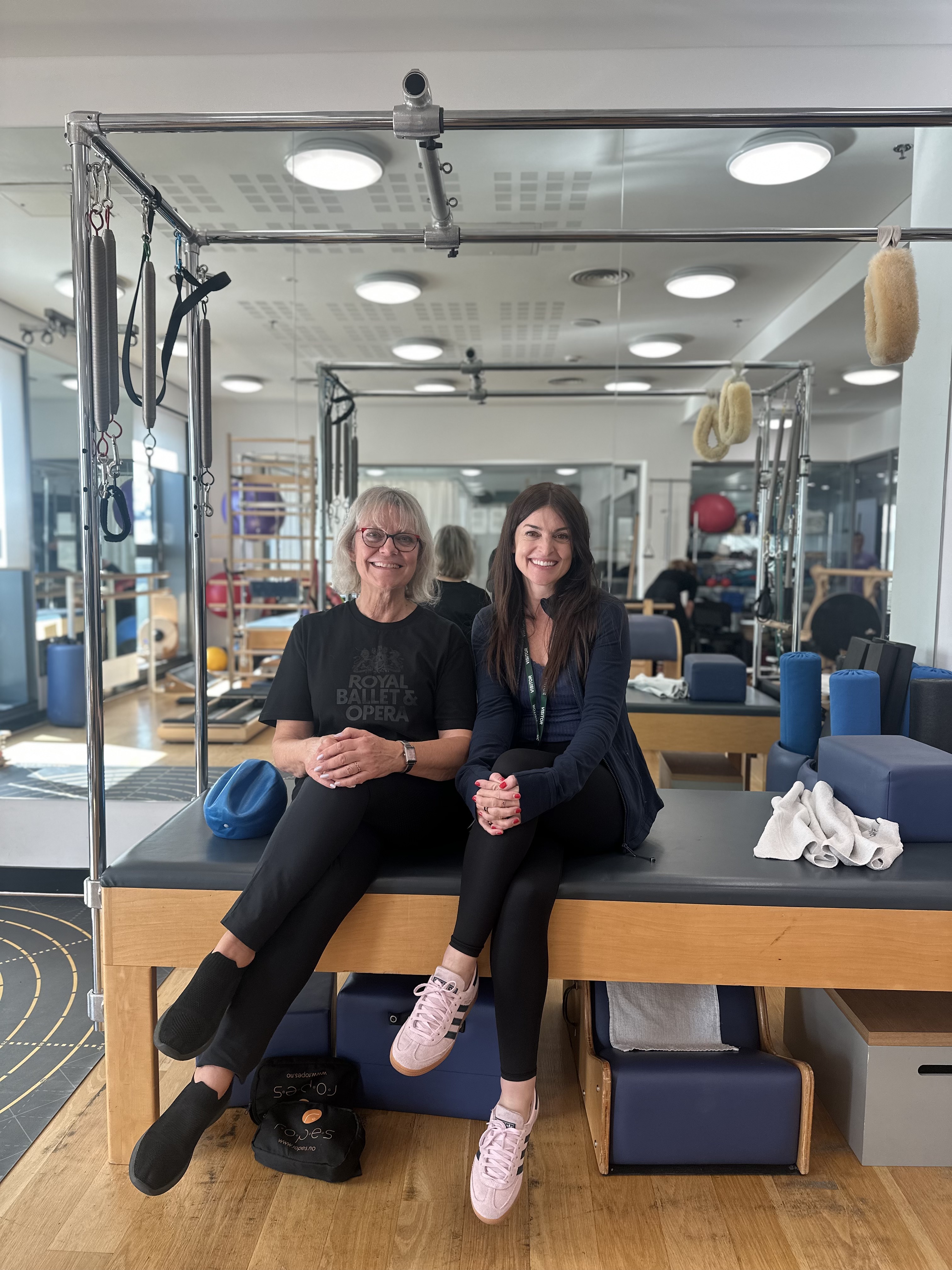
Ann with Jane Paris at the Royal Ballet Company Pilates studio.
Reflecting on my own training, I realised I hadn’t been taught these principles as a dancer. Like many young dancers, I relied heavily on visual imagery and external cues, often doing whatever was necessary to achieve a position. Cues such as “tuck” or “pull up” can be abstract for children and adolescents, who may recruit the wrong muscles in an effort to comply. This realisation led to the development of Pilates for Ballet Technique at Master Pilates.
My focus is helping dancers understand what these classical cues mean functionally, and how correct alignment allows positions to be achieved with greater efficiency and ease. When technical corrections are supported by functional strength and joint organisation, technique becomes more sustainable and injury risk is significantly reduced. Many of my students have gone on to train or perform with leading ballet schools and companies internationally, and it is deeply rewarding to see this understanding established early in their training.
In 2025, I felt the need to further deepen my education. After discovering Pilates Conditioning for Dancers by Jane Paris (my ‘bible’) I contacted Jane to ask whether I could observe her in London. She generously agreed.
In September of last year, I spent a day in the Royal Ballet Company’s Pilates Studio, observing Pilates sessions, company class, and the integrated medical team. What stood out was the ease of collaboration between disciplines and the respect afforded to individual bodies within a highly technical environment. The Royal Ballet Company refers to Jane’s studio simply as ‘Pilates’ – a choice that honours the integrity of the method rather than reframing it under alternative labels.
The experience reinforced what I had come to believe: Pilates is most effective when it adapts to the dancer, not when the dancer adapts to Pilates.
Today, my work sits at the intersection of ballet, rehabilitation, and Pilates. My guiding principle remains unchanged: teach the body in front of you. When anatomy is honoured, individuality respected, and alignment prioritised over aesthetics, Pilates becomes a powerful tool for resilience, longevity, and performance for elite dancers and for the general population.
I remain deeply committed to sharing this approach with dancers and instructors alike, and to continuing my own learning within this evolving field. I also hold great respect for ballet companies that invest in research-led, interdisciplinary medical models. The injury prevention strategies developed within these environments are increasingly informing best practice across elite sport and continue to place dance medicine at the forefront of performance health.
ABOUT ANN WILDE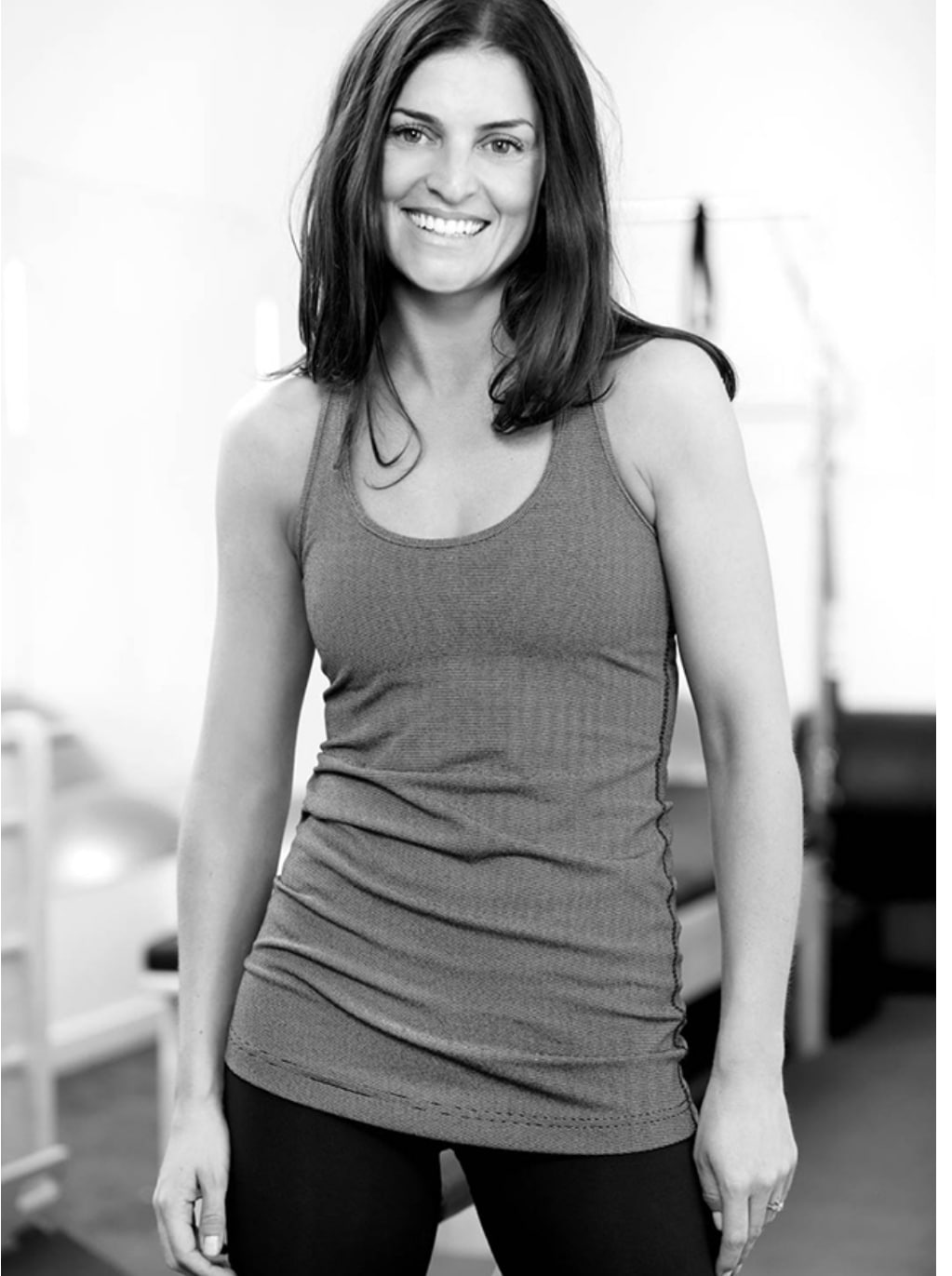
Ann is the founder of Master Pilates and has been a dedicated instructor since 2007. A former professional dancer, she began ballet at the age of five and moved to Melbourne at 18 to train full-time. After sustaining a back injury, she discovered Pilates during her rehabilitation, an experience that not only helped her return to dance stronger than before but also sparked a lifelong passion for the Pilates method.
In 2010, Ann opened Master Pilates in South Yarra, Melbourne, to share the transformative power of Pilates with others. She has a strong focus on injury rehabilitation across all joints, with a particular emphasis on spinal health and back care. Ann is also deeply committed to educating her clients about their bodies, helping them understand their own imbalances so they can take an active role in their healing and long-term wellbeing.
Since 2014, she has specialised in conditioning for dancers and Pilates for pre-professional ballerinas. Many of her students have gone on to train and perform with world-renowned institutions including the English National Ballet School, San Francisco Ballet School, The Australian Ballet School, and The Australian Ballet Company.
Ann is a Principal Trainer with the Pilates Alliance Australasia (PAA) and serves on the Australian Ballet Ambassador Board. She holds a Bachelor of Dance (High Distinction) from the Victorian College of the Arts (VCA), a Diploma of Classical Ballet from the National Theatre Ballet School (NTBS), and a Diploma of Professional Pilates Instruction with Pilates International (PITC).