By Nina Levy for Ausdance WA
“One of the things about dance that I think is underappreciated is that you’re learning about your body. And every single person has a body.”
– Molly Tipping, Feldenkrais practitioner specialising in nervous system regulation
In a world that is increasingly screen-based, studying dance offers young people the chance to inhabit, understand and connect with their own bodies, and how they occupy the real world.
But dance training also provides students with skills and approaches that are beneficial across a range of professions and careers, and, indeed, across a lifetime.
It’s these life-long benefits that make dance an invaluable subject to take in Year 11 and 12. The rewards of studying dance are myriad – fostering innovation, discipline and perseverance whilst also improving both physical and socio-emotional wellbeing – and they begin immediately, supporting the student through the challenges of their final years of schooling and into the outside world.
Connecting with your body (and disconnecting from screens)
Although our awareness of the health risks of a sedentary lifestyle has improved, our education system is highly sedentary, observes Shona Erskine, a psychologist who specialises in working with performing and visual artists.
“There’s so much research around why [being sedentary] is not good for us; how, as humans, we are designed to be moving around, and that moving helps so many systems in the body, [including] the learning systems,” she says.
“So having parts of your schedule available … to be moving the body is a wonderful thing.”
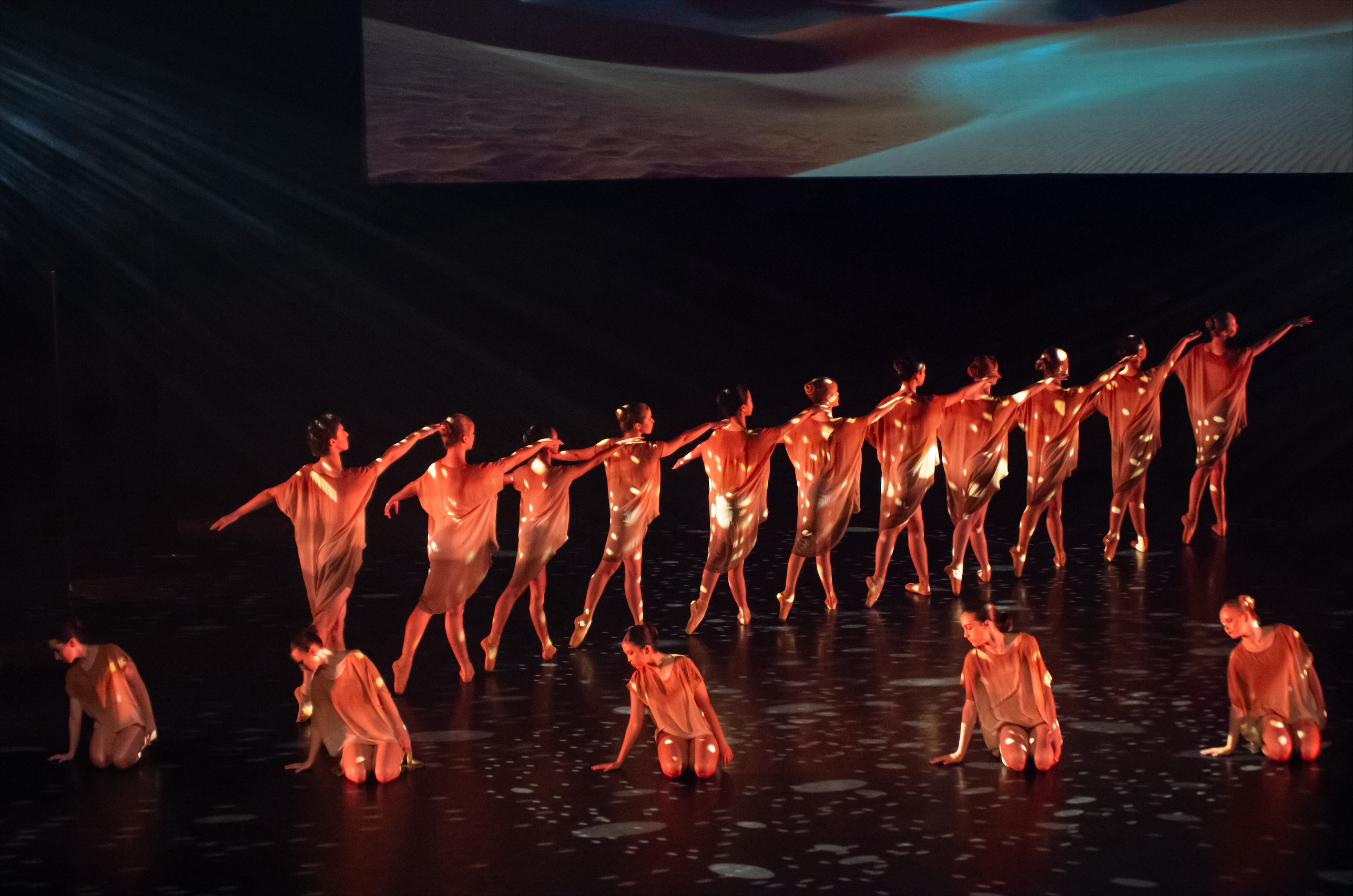
‘Shift’ by Diedre Atkinson and Nicola Wade, Year 10 – Year 12 Ballet. John Curtin College of the Arts
Bringing together practical skills such as dance technique, choreography and improvisation, with theoretical skills like biomechanical principles and dance analysis, the West Australian ATAR Dance course provides students with the opportunity to learn about movement by moving.
That’s valuable training for any young person, says Tipping.
“You’re always going to have a body, you will always need to know how to strengthen your body, stretch your body, move it correctly.
“And hopefully you’re always going to be on the dance floor. You’re always going to be trying new things, whether it’s martial arts or horse riding, or surfing. Your dance background will mean that whatever you take up, you’re confident to give things a go.
“There’s something about learning about your body theoretically, but also kinaesthetically, that puts you a step ahead in your adult life. You understand your body, you have confidence that you can challenge yourself and take on new things.”
A social scaffold
High school can be a challenging time socially, and friendship groups may feel rigidly defined. Those who take ATAR Dance, however, have a chance to form bonds outside those groups.
ATAR graduate and provisional psychologist Holly Morgan speaks about the strength of the bond within her dance cohort. “We had to work together to figure out the set [choreography]. We had to be aware of one another and also tuned into others’ bodies in the space when we were [rehearsing]. We became close through that shared experience.”
There was also camaraderie across year groups, says Ella Brown, a graduate now studying engineering/commerce. “You connected with all the dance students… we did things in Year 11 where we would work with the Year 12 ATAR dancers, or we’d have an inter-school dance performance with younger students.”
ATAR graduate Saskia Glass, now a funeral director, performing arts school director and freelance film director, recalls, “So much vulnerability goes into creating original work, fostering a network of trust between teachers and classmates alike that carries on beyond the school gates.”
Not only is this beneficial for students’ wellbeing, but it more effectively mimics life after school, says Tipping. “In the real world you are going to be part of groups of people working together toward a single goal.”
Managing the big feelings of adolescence
That community also provides opportunities for co-regulation, the process by which we regulate our own emotions and physiological responses by interacting with others.
“In dance, we learn that… we can get a hit of energy because the beat of the music is right for us and we’re all moving to it together. Or we can feel this – ahhhhh – deep sigh, because we’re all lying on the floor together and releasing the tension to finish the class,” says Erskine.
“Adolescence can be a rough time, and, in my experience, those [students] who are supported through that time with some kind of artistic output, movement output, dance output, tend to fare better. It becomes like a surrogate family for them … and that’s that co-regulation.”

Abigail Best, ATAR Dance, Penrhos College. Photo by Abbie Hunt Creative.
Dance is particularly effective for the nervous system, says Tipping, because it brings together three regulating elements: 1) movement, 2) movement with others, and 3) creativity. “There’s a triple benefit to dance that is quite different to most other activities,” she says.
Testimonials from ATAR dance graduates reveal the role that dance played in maintaining their wellbeing.
“Dance helped me in my other subjects because it gave me that physical release that I needed,” says child health nurse and mother Cameron Lawrence.
“ATAR dance was my sanctuary throughout Year 11 and 12. It was a breath of fresh air to get out from behind a desk and unglue my eyes from the computer screen,” says Glass.
“Stepping into the dance studio was so relieving in comparison to the pressure in every other classroom… The studio is, quite literally, a wide open canvas.”
“ATAR dance was a space to take risks and explore creativity and ideas,” says nursing student Abigail Best.
“Many of the assignments assessed me on how I portrayed ideas and the formulation of movement from a stimulus. That supported my emotional wellbeing through Year 12 as I had a creative outlet and way to express what was happening in my mind, and a consistent, safe space to explore without fear of judgement.”
Emotional resilience beyond school
While dance is a regulating activity in the context of a school timetable, grounding and centring skills learnt in dance technique classes may be used for emotional regulation long term, in both personal and professional contexts, says Morgan.
“Dance gave me awareness of the influence that breath has on your movement, power and body. That’s really important now in my career as a psychologist. One strategy I use with clients to regulate their nervous system is diaphragmatic breathing, which I learned in ATAR Dance.
“Another strategy I use with clients, that I learned in dance, is grounding. It’s used to bring them back to the present moment by getting them to feel their feet flat on the floor, and push into the floor to feel that sensation of transferring weight into the floor, and feeling grounded.
“In dance I also learned how to focus my attention to different parts of my body… That’s something that I do now, when I work with athlete clients. When you feel anxious or have pre-performance nerves, you’re paying attention only to your nerves, or your thoughts, or your feelings, or your uncomfortable internal experiences. We work on finding ways to turn attention from those internal experiences to the external environment and into your body instead of in your brain. So that’s another thing I learned through dance”
Grace under pressure
Performance is a central component of the internal and external assessment of ATAR dance, and one of the benefits of that focus on practical assessment is that it develops students’ ability to cope under pressure.
“The environment of dance is a stressful one, because you’re up there on stage in a school production, in front of a whole lot of people, or you have to do your solo in front of an assessment panel,” says Erskine. “It’s super scary for the human brain to go up in front of other people and to do something or present something.

John Curtin College of the Arts. ‘The Weight of the Braid’ by Ella Cartledge, Year 12 ATAR Dance.
“That kind of physical assessment is way more stressful than a written exam. And being able to handle your stress is a skill.”
There are many jobs in which the ability to work well under pressure is valued. And while you might not imagine that dance training would be preparation for a life or death situation, for Samantha Crameri Miller it was.
The 2014 Western Australian Academy of Performing Arts (WAAPA) dance graduate is now operations co-ordinator for the Royal Flying Doctor Service (RFDS).
“It’s my job to look at a map and see where all the sick people are and where my aeroplanes are, and send the correct aeroplanes to the correct people to try to save as many people as possible,” she says. “It’s very fast-paced and constantly changing.”
Crameri Miller says that her dance training prepared her for dealing with pressured situations, and she relishes that aspect of her job.
Dancers are critical thinkers
ATAR Dance graduates reported that they could apply analytical skills developed in ATAR Dance to subjects such as English.
Brown says she struggled with English until she took ATAR Dance.
“I could think about a book the way I interpreted a dance work, as something that might have more than one meaning,” she says. “Even the way we would write about dance works – when I wrote my analytical essays in English, I followed that structure, and it helped me unpack the different ways you might read a text.”
Glass has transferred the skills she learned around observing and analysing a visual medium to her work as a funeral director. “Learning to watch someone move their body and recognise it as a language has been invaluable, particularly as I now work in the industry of grief, where words often fail us and a lot of communication is shared non-verbally,” she says.
Morgan applies those same skills to her work as a provisional sport and exercise psychologist.
“The written component of ATAR Dance taught me to look deeper, and ask the question ‘Why?’, and look into the meaning of things that might appear simple. That’s really important in my career. In psychology that’s all we do, look deeper into what might present on the surface and ask why.”
ATAR Dance has also helped Morgan to be more tolerant of difference.
“We studied dance works that were designed to be subjectively interpreted; that was the whole point of them, for two people to watch them and get a different impression,” she says.
“That improved my ability to recognise that not everything is black and white, and to tolerate being uncertain about what something might have meant. Dance gave me the opportunity to understand that it would be okay if I saw something differently to someone else or had a different interpretation of something to someone else’s.”
Thinking outside the box
With choreography and improvisation integral to the course, ATAR Dance is grounded in developing students’ creativity. That capacity to come up with original and innovative ideas, is useful across multiple fields and contexts.
Tipping credits many of her professional achievements to creative approaches developed during her WAAPA dance training and experiences as a dance artist.

Bob Hawke College. Image by DancePro
“As a Feldenkrais practitioner it’s not just my skill that has led to my success in this industry. It’s my ability to be creative; conceive of my business, track and consider all of these elements, have confidence, put my ideas out in the world, be brave and experimental,” she says.
“From the micro to the macro, being a dancer and having that creative mindset has meant that I’m much more successful in running a business.”
Primary school teacher Sarah Mehnert says her ATAR Dance training shapes the way she approaches teaching. “Dance helped me develop confidence, creativity and the ability to think openly, which I now use in my work as a teacher. More broadly, I think it made me more open-minded and willing to try new things, as the course often pushed me outside of my comfort zone, especially the choreography and improvisation side of it.”
Tipping concludes, “People talk about dancers being amazing managers, amazing business owners. That’s because they are used to being creative, improvising, solving problems, being brave.”
Why are dancers so organised, efficient and disciplined?
Another reason dancers are known for being excellent managers is their organisational skills, motivation and work ethic, all of which ATAR Dance develops.
“ATAR Dance requires a lot of self-motivation, especially for the original solo the students have to choreograph for their exam,” says Rachael Bott, dance educator and director of Creative Moves WA.
“Creating the solo involves being able to plan, prioritise and schedule your time, and meet milestones along the way – it’s project management, essentially, and having to fit that in amongst, potentially, five other subjects. So you’re going to develop time management skills.”
“ATAR Dance built skills like collaboration, discipline, and giving and receiving feedback, which are all important in [my work in] a school environment,” remembers Mehnert. “I regularly draw on these when working with colleagues and supporting students.”
David Mueller, who runs a dance photography and video business, says that for the last eight years he has exclusively hired dancers – ranging from high school dance students to tertiary dance students to dance teachers – to train as photographers.
“Dancers are adaptable and flexible, not just in their muscles,” he says. “They understand the pressure and the importance of performing on stage. The dancers are always excellent at being on time, reliable and responsible.”
Navigating people and places
Dance training develops a person’s awareness of their body in space, from choosing the way to navigate a crowded room, to understanding the impact posture and body language have on our interpersonal interactions.

Penrhos College. Year 12 ATAR Dance Site Specific Work. Supplied by Penrhos College.
“ATAR Dance improved my self-awareness and the impression that I’m having on other people, by knowing where my body is in space and where it is relative to other people. That now feeds into helping (clients) to feel comfortable with me,” says Morgan.
Crameri Miller says that refined spatial awareness is a pre-requisite for her job as a RFDS flight co-ordinator.
“There are online tests that my kind of organisation will make you do before even taking you for an interview, and there’s these spatial awareness tests, which dancers are amazing at,” she says. You have to look at shapes, and they’ll manipulate them, twist them, and you have to recognise, oh, that’s the same shape that’s turned exactly this many degrees. Dancers just know it!
“Other skills that are important in my job are your ability to hold images in your head, remembering different flying times, and understanding the importance of timing, all skills that dancers develop when learning and rehearsing choreography.”
Boosting self-esteem and confidence
In an era in which young people are bombarded with online images about how they should look, a number of ATAR Dance graduates spoke of the way in which the subject gave them a sense of pride in their body for its capabilities rather than its appearance.
“Dance gave me a new appreciation for what my body can do instead of what it looks like,” says Morgan. “That is still really important for me now.”
The demands of the course also help to build confidence.
“ATAR Dance instilled a sense of bravery in me that I’ve been able to bring to other endeavours,” says Glass.
“Working as a funeral director, I’m often supporting highly anxious or emotionally unstable individuals at a particularly sensitive time in their lives, and something as simple as performing a dance routine is surprisingly similar to leading a family through a funeral service. The family is like the audience, they trust you to know the choreography and guide them through, and if you make a mistake, just don’t show it on your face, they’ll assume it was part of the dance! That’s a tried and true funeral director’s tactic, and I wouldn’t have that skill if it weren’t for dance.”
Know thyself
Both Erskine and Tipping talk about embodiment, a term that refers to our ability to recognise and respond to the way in which we carry our thoughts and emotions in our bodies. Studying Dance, say Erskine and Tipping, enables us to become more embodied, better connected to the knowledge and sensations in our bodies.
“Dance is about coming to know what this body – that you have been gifted with – likes and doesn’t like.” says Erskine.
Learning to pay that deep attention to your body is a skill that is developed through dance training, she continues.
“There are not many things that provide us with that opportunity in our day-to-day study or work lives. The computer takes us out of our bodies. Stress, conflict, those things take us a long way away from ourselves.
“Providing young people an opportunity to dance has a lot to do with embodiment and all that it offers, which helps with identity, self-esteem, reduction of stress.
“Embodiment reminds us that the universe doesn’t ask us to be anything, just being is enough. And there’s something about embodiment which allows a human to just tap into that sense of being, which is just so profoundly important in the modern world that we have created.”
Nina Levy wishes to extend her sincere thanks to Shona Erskine, Molly Tipping, Rachael Bott, Samantha Crameri Miller, David Mueller, Ella Brown, Holly Morgan, Cameron Lawrence, Saskia Glass, Sarah Mehnert and Abigail Best for their thoughtful and sensitive contributions to this essay.
Biographies
Nina Levy is a West Australian arts writer, critic and editor.
Interviewees
Shona Erskine is a registered psychologist in private practice, with 30 years’ experience working in the arts sector, and expertise in psychology for performing and visual arts. She is also a practising dance artist.
Molly Tipping is a Feldenkrais practitioner specialising in nervous system regulation. She works with dancers and actors, as well as people who have pain, injury and anxiety.
Rachael Bott is director of Creative Moves WA, an organisation delivering tailored school dance programs and dance incursions that address the dance syllabus in the WA Arts Curriculum, and support and integrate other curriculum areas such as literacy and numeracy.
Samantha Crameri Miller is operations co-ordinator for the Royal Flying Doctor Service and an independent dance artist.
David Mueller is a secondary school dance teacher and runs DancePro Photography & Videography.
Graduates of ATAR Dance 2016 – 2025
Abigail Best is studying nursing
Ella Brown is studying engineering and commerce, and working part time as a swim and dance teacher.
Saskia Glass is a funeral director, performing arts school director and freelance film director.
Cameron Lawrence is a child health nurse and mother.
Sarah Mehnert is a primary school teacher.
Holly Morgan is a provisional psychologist, studying a Masters of Psychology with a specialisation in sport and exercise
This essay was commissioned by Ausdance WA and has been funded by the State Government of Western Australia through the Department of Creative Industries, Tourism and Sport.